
How to Start a Private School in India 2026:
Author: Vinay Pratap Singh Chauhan | Head of Consulting | Education Infrastructure & Compliance Expert (Since 2008)
Learn how to start a private school in India in 2026.
Complete guide covering school registration, land requirements, CLU approval, building permissions, Fire NOC, UDISE registration, recognition, and CBSE affiliation.
Starting a private school in India can be a rewarding investment in the education sector. However, establishing a school involves much more than acquiring land and constructing classrooms. School promoters must comply with numerous legal, regulatory, infrastructure, safety, and affiliation requirements before operations can begin.
Many educational projects face delays, cost escalations, or affiliation challenges because compliance planning was not addressed at the beginning. Whether you are an educational trust, society, NGO, Section 8 company, or private investor, understanding the complete compliance framework is essential for successful school establishment.
This guide explains the step-by-step process of starting a private school in India, including land approvals, construction compliance, recognition requirements, and school affiliation procedures.
Why Compliance Matters When Starting a Private School in India
School compliance is not simply a legal requirement. It directly affects:
- Project approval timelines
- Investment protection
- Infrastructure planning
- Student safety
- School recognition
- Board affiliation eligibility
- Long-term operational sustainability
A structured compliance strategy helps educational institutions avoid legal disputes, regulatory penalties, construction delays, and rejection during affiliation inspections.

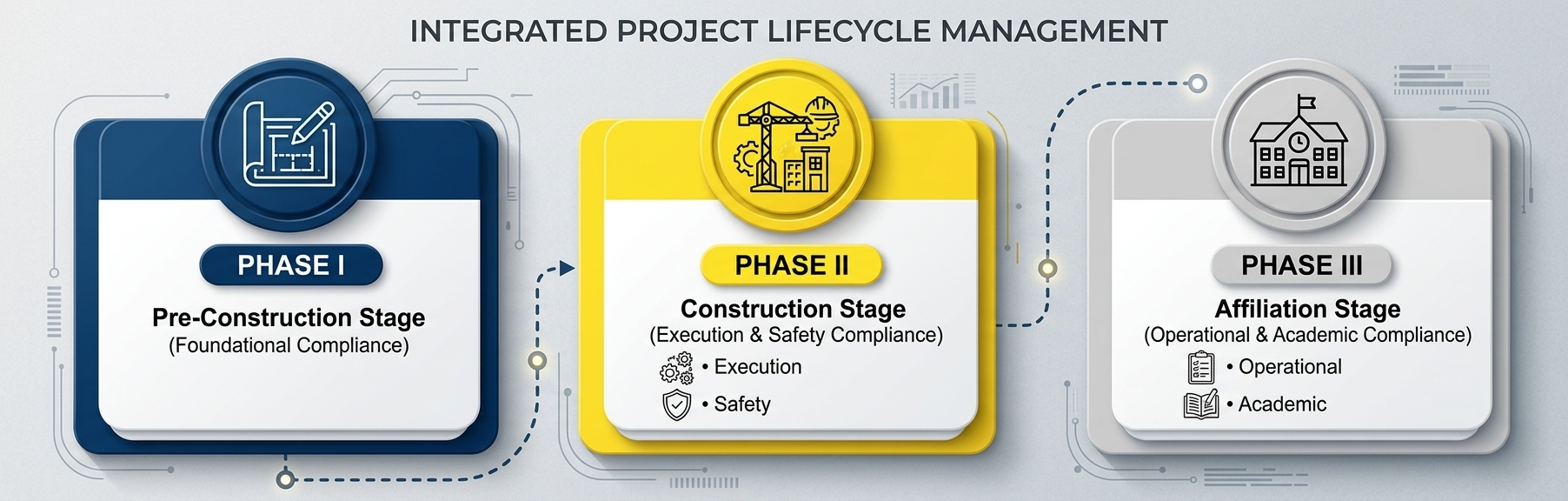
The Three Stages of School Compliance in India
The process of establishing a private school can be divided into three major phases:
Phase 1: Pre-Construction Compliance
Creating the legal and regulatory foundation for the institution.
Phase 2: Construction Compliance
Developing infrastructure that meets safety and educational standards.
Phase 3: School Recognition and Affiliation
Obtaining approvals to legally operate and provide formal education.
Let's examine each stage in detail.
Phase 1: Pre-Construction Requirements for School Registration in India
The pre-construction phase is critical because it establishes the legal framework of the institution.
1. Formation of the School Operating Entity
Before applying for approvals, the school must be established under a legally recognized body.
Common structures include:
- Educational Trust
- Registered Society
- Section 8 Company
The governing body becomes the legal applicant for all future approvals, recognitions, and affiliations.
2. Land Ownership and Documentation
Land verification is one of the most important requirements for school registration in India.
Authorities typically require:
- Ownership documents
- Registered lease deed (where applicable)
- Mutation records
- Encumbrance-free certificates
- Revenue records
Any dispute regarding ownership can significantly delay approvals.
3. Change of Land Use (CLU) Approval
If the land is not designated for educational purposes, a Change of Land Use (CLU) approval must be obtained.
CLU permits conversion from:
- Agricultural land
- Residential land
- Commercial land
To:
- Educational or institutional use
Failure to secure CLU approval can result in legal complications and denial of future permissions.
4. Zonal and Development Authority Clearance
Planning authorities verify whether the proposed school location complies with:
- Master plans
- Zoning regulations
- Urban development policies
- Local land-use guidelines
This approval ensures that the institution is being established in a legally permissible location.
5. Building Plan Approval
Before construction begins, architectural and engineering drawings must be approved by the competent authority.
Building plan approval generally evaluates:
- Floor area
- Setbacks
- Accessibility standards
- Structural design
- Safety requirements
Construction should not begin before receiving sanctioned plans.
6. Utility and Infrastructure Approvals
Additional pre-construction approvals may include:
Water Supply Permission
Approval from municipal or groundwater authorities.
Electricity Load Sanction
Assessment and approval of required electrical capacity.
Road Access Clearance
Verification of legal access to the property.
Environmental Clearance
Required in specific projects depending on land area and location.
Common Mistakes During School Planning
Many school promoters encounter delays because they:
- Purchase land without educational-use verification
- Begin construction before CLU approval
- Ignore zoning regulations
- Maintain incomplete land documentation
- Delay utility applications
Addressing these issues early can save months of project delays.
Phase 2: Construction Compliance Requirements
Once statutory approvals are secured, focus shifts toward creating a safe and compliant educational campus.
This stage is particularly important because authorities assess whether the infrastructure is suitable for students and staff.
1. Building Completion Certificate
After construction is completed, local authorities verify whether the building conforms to approved plans.
The Building Completion Certificate confirms:
- Structural compliance
- Approved construction parameters
- Legal completion of the building
2. Fire Safety Certificate (Fire NOC)
Fire safety is one of the most important school affiliation requirements in India.
Authorities evaluate:
- Fire extinguishers
- Emergency exits
- Alarm systems
- Fire-fighting equipment
- Evacuation procedures
Without a valid Fire Safety Certificate, schools may face recognition and affiliation challenges.
3. Health and Sanitation Certificate
Health departments inspect:
- Washroom facilities
- Drinking water systems
- Waste management arrangements
- Hygiene standards
This certification ensures a healthy learning environment.
4. Structural Stability and Building Safety Certificate
Qualified structural engineers assess:
- Load-bearing capacity
- Structural integrity
- Building safety standards
- Long-term durability
These certificates demonstrate that the building is safe for occupancy.
5. Occupancy Certificate (OC)
An Occupancy Certificate confirms that the premises are fit for use and comply with approved development regulations.
This is often one of the final infrastructure approvals before operations begin.
6. Electrical Safety Compliance
Electrical authorities review:
- Internal wiring
- Transformer installations
- Safety mechanisms
- Load compliance
Proper electrical certification reduces operational risks and improves safety.
7. Water Quality and Environmental Compliance
Schools may be required to submit:
- Water quality reports
- Sewage approvals
- Drainage compliance certificates
- Rainwater harvesting documentation
These requirements support sustainable campus operations.
8. Accessibility Compliance
Modern educational institutions are expected to provide inclusive infrastructure.
Accessibility requirements may include:
- Ramps
- Accessible washrooms
- Barrier-free pathways
- Directional signage
Compliance supports equal access for all students.
Why Infrastructure Compliance Is Critical
Failure to obtain required safety certifications can result in:
- Delayed school opening
- Regulatory penalties
- Affiliation rejection
- Legal liability
- Increased operational risk
Maintaining proper documentation during construction significantly improves approval timelines later.
Phase 3: School Recognition and Affiliation Process
The final stage involves obtaining recognition and affiliation from educational authorities.
This phase determines whether the institution can legally provide formal education and issue recognized certifications.
1. Recognition from the State Education Department
Schools generally require formal recognition from the State Education Department before seeking board affiliation.
Recognition confirms compliance with state educational standards.
2. No Objection Certificate (NOC)
Many educational boards require a No Objection Certificate from the State Government or Union Territory administration.
The NOC certifies that authorities have no objection to the institution operating and applying for affiliation.
3. UDISE Registration
Every school must obtain a UDISE (Unified District Information System for Education) number.
UDISE registration enables:
- Educational reporting
- Government database integration
- Institutional identification
4. Land and Legal Verification
Authorities generally verify:
- Land certificates
- Registration documents
- Affidavits
- Ownership records
- Governance structure
Accurate documentation is essential for successful school affiliation.
5. Infrastructure Validation
Inspecting authorities assess whether the school possesses:
- Classrooms
- Laboratories
- Libraries
- Administrative facilities
- Safety infrastructure
Infrastructure readiness plays a significant role in affiliation approval.
6. Employee and Financial Compliance
Educational boards increasingly evaluate financial transparency and employee welfare.
Important requirements include:
EPF Registration
Compliance with employee welfare regulations.
Salary Payment Records
Evidence of salary disbursement through banking channels.
Audited Financial Statements
Verification of institutional financial stability.
Reserve Fund Documentation
Required by certain boards and jurisdictions.
Comprehensive School Compliance Checklist
Pre-Construction Checklist
✔ Trust/Society/Section 8 Company Formation
✔ Land Ownership Documentation
✔ Change of Land Use (CLU)
✔ Zonal Clearance
✔ Building Plan Approval
✔ Water Supply Approval
✔ Electricity Load Sanction
✔ Environmental Clearance (if applicable)
Construction Compliance Checklist
✔ Building Completion Certificate
✔ Fire Safety Certificate
✔ Health & Sanitation Certificate
✔ Building Safety Certificate
✔ Occupancy Certificate
✔ Structural Stability Certificate
✔ Electrical Safety Certificate
✔ Water Testing Report
✔ Accessibility Compliance
Affiliation Checklist
✔ Recognition Letter
✔ No Objection Certificate (NOC)
✔ UDISE Registration
✔ Land Certificate
✔ Legal Affidavits
✔ Infrastructure Documentation
✔ EPF Compliance
✔ Salary Records
✔ Financial Statements
Best Practices for School Promoters
Start Compliance Planning Early
Conduct regulatory assessments before purchasing land.
Maintain a Compliance Calendar
Track approval timelines, inspections, and renewal dates.
Digitize Documentation
Create a centralized repository for approvals and certificates.
Conduct Internal Audits
Review compliance status at every project milestone.
Seek Professional Guidance
Expert consultants can help reduce risk and accelerate approvals.
Official References & Resources
To verify regulatory requirements and board affiliation procedures, readers may refer to:
Frequently Asked Questions (FAQs)
How much land is required to start a private school in India?
Land requirements vary depending on the state, city, educational board, and proposed student capacity. Requirements should be verified with the relevant authorities and affiliation board.
Is CLU mandatory for school construction?
Yes, if the land is not already designated for educational or institutional use, Change of Land Use (CLU) approval is generally required.
What approvals are required before constructing a school?
Typical approvals include land verification, CLU approval, zoning clearance, building plan approval, utility permissions, and environmental clearance where applicable.
Is UDISE registration mandatory?
Yes. Schools are generally required to obtain a UDISE number for official educational reporting and recognition purposes.
What is the importance of a Fire NOC for schools?
A Fire Safety Certificate demonstrates compliance with fire safety standards and is often required for recognition and affiliation.
How long does the school affiliation process take?
The timeline varies depending on the educational board, state regulations, infrastructure readiness, and documentation completeness.
Conclusion
Starting a private school in India requires careful planning, substantial investment, and a well-structured compliance strategy. From legal entity formation and land approvals to safety certifications, UDISE registration, recognition, and board affiliation, each stage plays a critical role in the institution's success.
Educational institutions that treat compliance as a strategic planning process rather than a regulatory obligation are more likely to achieve timely approvals, secure affiliations, and establish a strong foundation for long-term educational excellence.
By following this comprehensive school compliance roadmap, school promoters can minimize risk, improve project efficiency, and build institutions that meet the highest standards of governance, safety, and academic readiness.